In-House Research at EBTL
The Eastern Ghats are among the oldest mountain systems on Earth, with geological origins tracing back to the Precambrian era. Yet, despite their age and ecological significance, the Eastern Ghats remain one of India’s least studied landscapes, especially when compared to the Western Ghats.
Elephants By The Lake (EBTL) has established a dedicated in-house field research initiative at our campus in Krishnagiri, Tamil Nadu, to address critical gaps in knowledge about Eastern Ghats biodiversity, ecology, and conservation priorities.
Our Research Focus
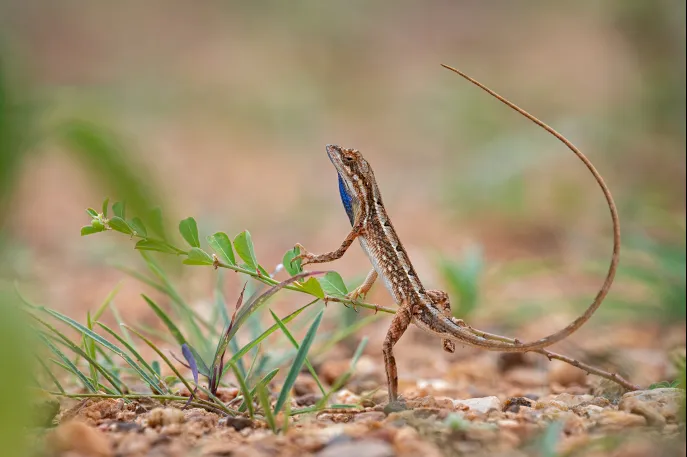
Our work begins with intensive field-based studies on herpetofauna and arachnids, groups that act as sensitive indicators of ecosystem health. Over time, the program will expand to include comprehensive biodiversity documentation across multiple taxa, creating a long-term ecological baseline for the region.
Integrated, Science-Driven Approaches
EBTL’s research integrates multiple scientific disciplines, including:
- Field surveys and long-term ecological monitoring
- Molecular genetics and taxonomy
- Stable isotope ecology
- Spatial and landscape-level analysis
Together, these approaches generate robust, policy-relevant data that support:
- Conservation planning and habitat restoration
- IUCN Red List assessments
- Key Biodiversity Area (KBA) identification and designation
Building Knowledge, Capacity, and Community
Our in-house research program is designed as a five-year initiative, focusing not only on science, but also on people and place. Key components include:
- Development of on-site research infrastructure
- Capacity building through an Open Taxonomic Initiative for students and early-career researchers
- Meaningful community engagement rooted in local ecological knowledge
Why the Eastern Ghats Matter
Through sustained research, collaboration, and open data sharing, EBTL aims to help reposition the Eastern Ghats as a globally significant biodiversity landscape, deserving focused conservation action and international attention.
This initiative reflects our belief that effective conservation begins with deep, place-based understanding, grounded in rigorous science and strong local partnerships.